What Treatments Are Involved in Periodontics?
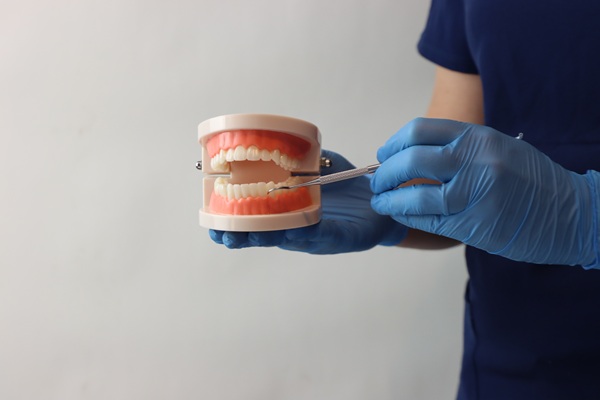
Periodontics focuses on diagnosing and treating issues that affect gum tissues and the other structures that support teeth. They provide a wide range of treatments, from restorative treatments for periodontal disease to cosmetic treatments aimed at improving the aesthetics of a person’s smile.
Popular treatments used in periodontics
Here are a few of the popular treatments used in periodontics to address issues like gum disease.
1. Scaling and root planing
Root scaling and planing is a more thorough version of a conventional teeth cleaning. It involves removing plaque, bacteria, and tartar from teeth and their roots. The procedure also includes polishing teeth roots afterward to reduce the rate of tartar accumulation.
Also known as deep cleaning, scaling and root planing is often broken up into multiple treatments to make recovery easier on patients. The procedure involves pulling back gum tissues to clean teeth roots, which can cause discomfort that lasts a few days.
2. Laser gum treatments
Lasers are less invasive when treating gum disease. For example, using a laser to remove bacteria and tartar below the gum line can be just as effective as using conventional tools, but it does not require pulling gum tissues from the teeth roots. Different types of lasers are available in periodontics, and they can be used to treat soft and hard structures in the mouth.
3. Tray delivery system
Mouth trays are often used for treatments like teeth cleanings, fluoride treatment, or antibiotics. After the dentist makes an impression of a patient’s mouth, it goes to a dental lab. In about two weeks, the custom tray will be sent to the dentist to be given to the patient.
4. Gum graft surgery
Teeth roots can be exposed due to issues like gum recession. Roots are vulnerable to decay because they are not covered with enamel, but rather cementum, which is not as durable. Exposed teeth roots can also affect the way that a person’s smile looks.
Gum grafts can be performed to help cover up exposed teeth roots. The procedure usually involves taking donor tissues from other parts of the mouth and using them to cover up exposed teeth roots.
5. Bone regeneration
This procedure is usually recommended when the bone structures supporting teeth have been damaged by issues like gum disease. It helps reverse the damage by removing the disease-causing bacteria in the area. Bone grafts or proteins that stimulate the production of healthy bone tissues are added to the site after removing the bacteria there.
6. Crown lengthening
Excessive gum tissues can affect the appearance of a person’s smile. The condition is also known as "a gummy smile," and it makes teeth appear abnormally short. Crown lengthening can be used to remove excess bone and gum tissues around teeth, making them appear longer.
Make your gum health a priority
Are you dealing with issues like periodontal disease? Give us a call, or stop by our location in San Jose to set up an appointment with our dentist.
Request an appointment here: https://www.sanjosedentistsnearme.com or call Agapé Dental Wellness at (408) 444-6267 for an appointment in our San Jose office.
Check out what others are saying about our dental services on Yelp: Periodontics in San Jose, CA.
Related Posts
Curious about dental fillings? Read on to learn more. Tooth cavities can be uncomfortable and a dental filling is necessary to resolve the issue. Your best bet is to prevent the condition from occurring in the first place. That requires a strict oral hygiene routine and regular dental checkups with a general dentist. Dental appointments…
If you rely on implant supported dentures for everyday oral function, a sudden repair may feel like a major setback for your confidence and comfort. While these restorations are designed for long-term durability, their mechanical components can wear down over time. Understanding the restorative process ensures that a solution is reached quickly. Although the titanium posts…
Your general dentist will suggest a dental filling for your decayed tooth. The consultation will explain why it is important to get. Understanding the reasons for having this restoration can encourage you to prepare for the treatment. Here are the dental filling benefits you must consider.Research shows that dental decay impairs a tooth’s function. Difficulties…
Restoring your damaged tooth with a dental filling is an easy procedure. It can stop the tooth’s damage from worsening. The general dentist will share aftercare instructions to enhance your oral health. Here are the ways a dental filling can elevate your oral health.Studies reveal that the enamel is the strongest substance in the body.…